

Green and Gold
Redefining Value in the Okapi Wildlife Reserve
In the half-light, the sound of diesel engines carries over the forest. Water thick with red clay runs through metal sluices, washing flakes of gold from ancient soil. As daylight lifts, the Muchacha-Penge mining complex comes into view – excavators working the riverbanks, rows of tin-roofed shelters stretching toward the tree line. It is estimated that up to ten thousand people work here in the south-west corner of the Okapi Wildlife Reserve.
The operation arrived from outside. The workers, mostly, did not. They are Congolese citizens — farmers, young people, families — pursuing livelihoods in one of the world's poorest regions. When the mine offered wages, the choice was rational. The permits appeared legal. The damage is irreversible.
Beneath the mine, the soil holds gold. Above it, the forest holds something worth considerably more — 730 million tonnes of carbon, equivalent to roughly two years of Germany's total emissions.
A Forest That Cannot Be Replaced
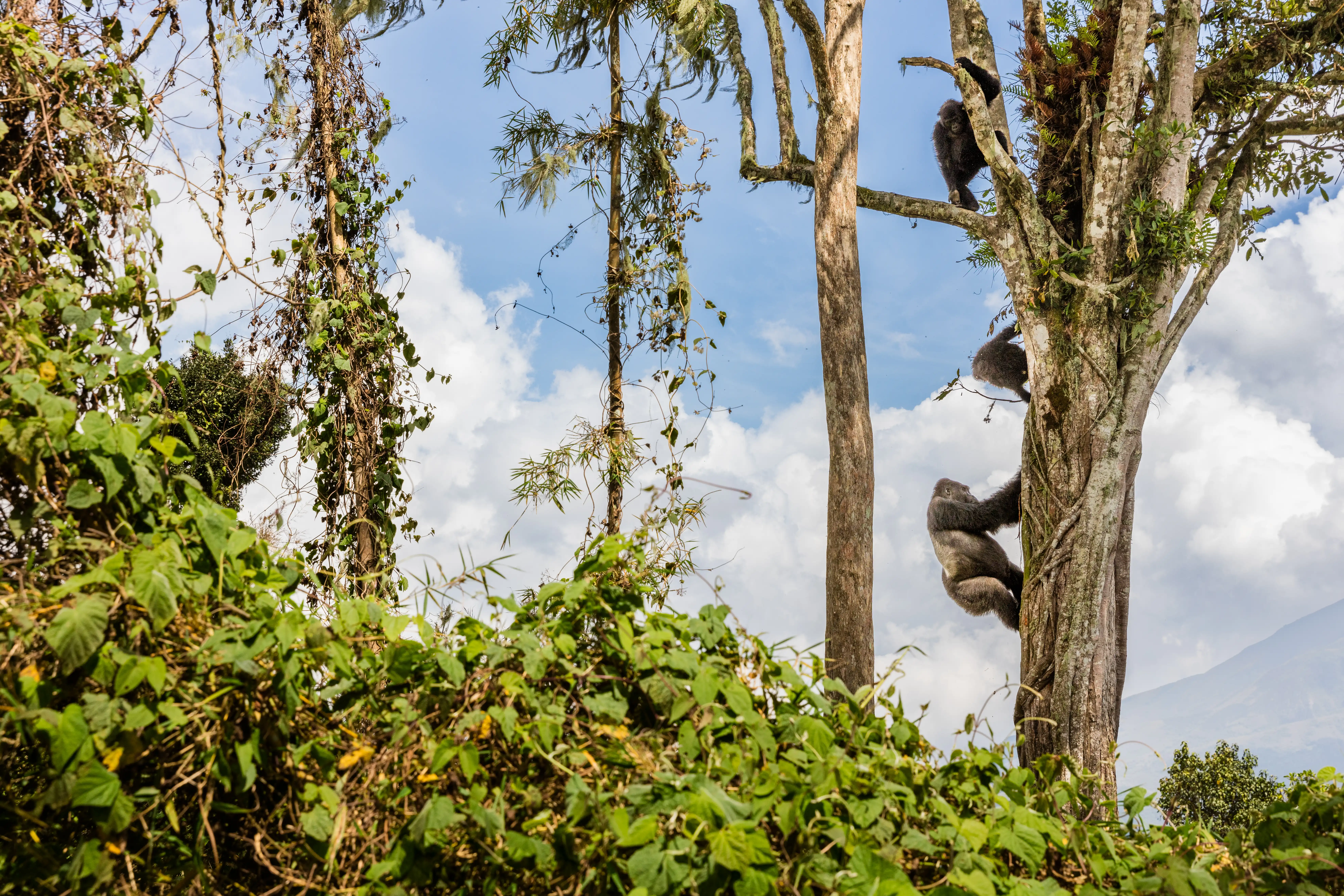
Once lost, Okapi Wildlife Reserve cannot be recovered. The Reserve spans 13,700 square kilometres — half the size of Haiti — protecting one of the last intact stretches of the Congo Basin's great rainforest. Here, roughly half the world's remaining okapi live alongside five hundred forest elephants and several thousand eastern chimpanzees. The okapi — a striped and secretive forest giraffe found nowhere else on Earth — appears on Congolese currency. It is a national symbol. Almost no Congolese citizen has ever seen one in the wild.
%202%20copy.webp)
The forest holds the highest primate diversity of any African landscape. The forest structure that stores 730 million tonnes of carbon took millennia to form. It cannot be recreated.
But it is the Reserve's position that makes it irreplaceable above all else. The Ituri forest forms the core link between the Congo Basin's western and eastern blocks of rainforest — a living bridge maintaining connectivity across one of the planet's most critical climate systems. If this core is lost, the surrounding landscape fragments. Species corridors break. Carbon release accelerates. The cascade, once begun, cannot be reversed.
Yet beneath that same soil lies gold. And every morning, the pumps start again – a daily push-and-pull between two definitions of value.
The Forest and Its Keepers
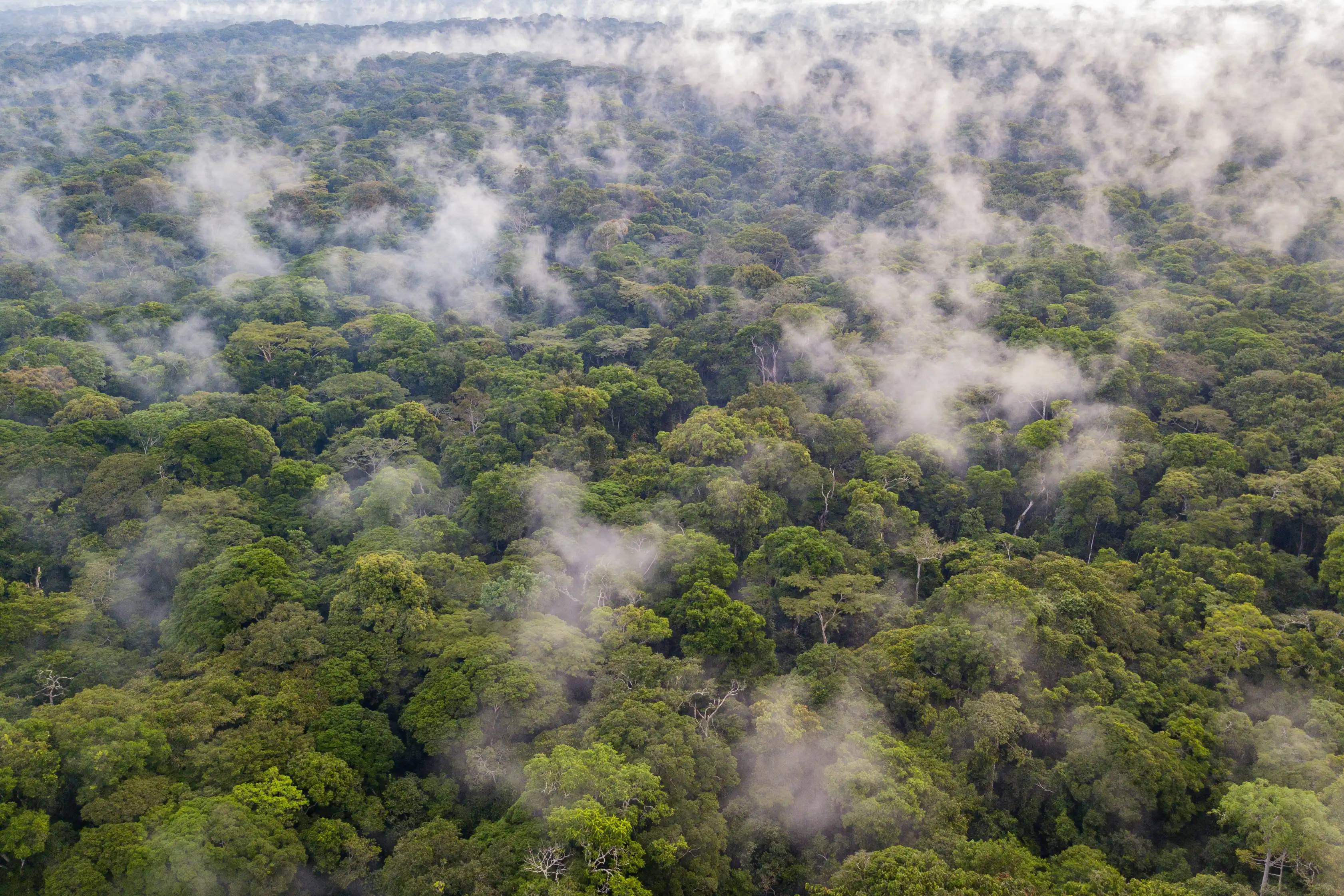
From above, flying over in a small plane, Okapi looks like science fiction — an ocean of green stretching to every horizon, as though civilization never arrived. Then the pattern breaks: Muchacha's pale grid against the canopy, the ocher cut of dirt roads fragmenting wilderness. But overwhelmingly, it is green. Immense. Alive.
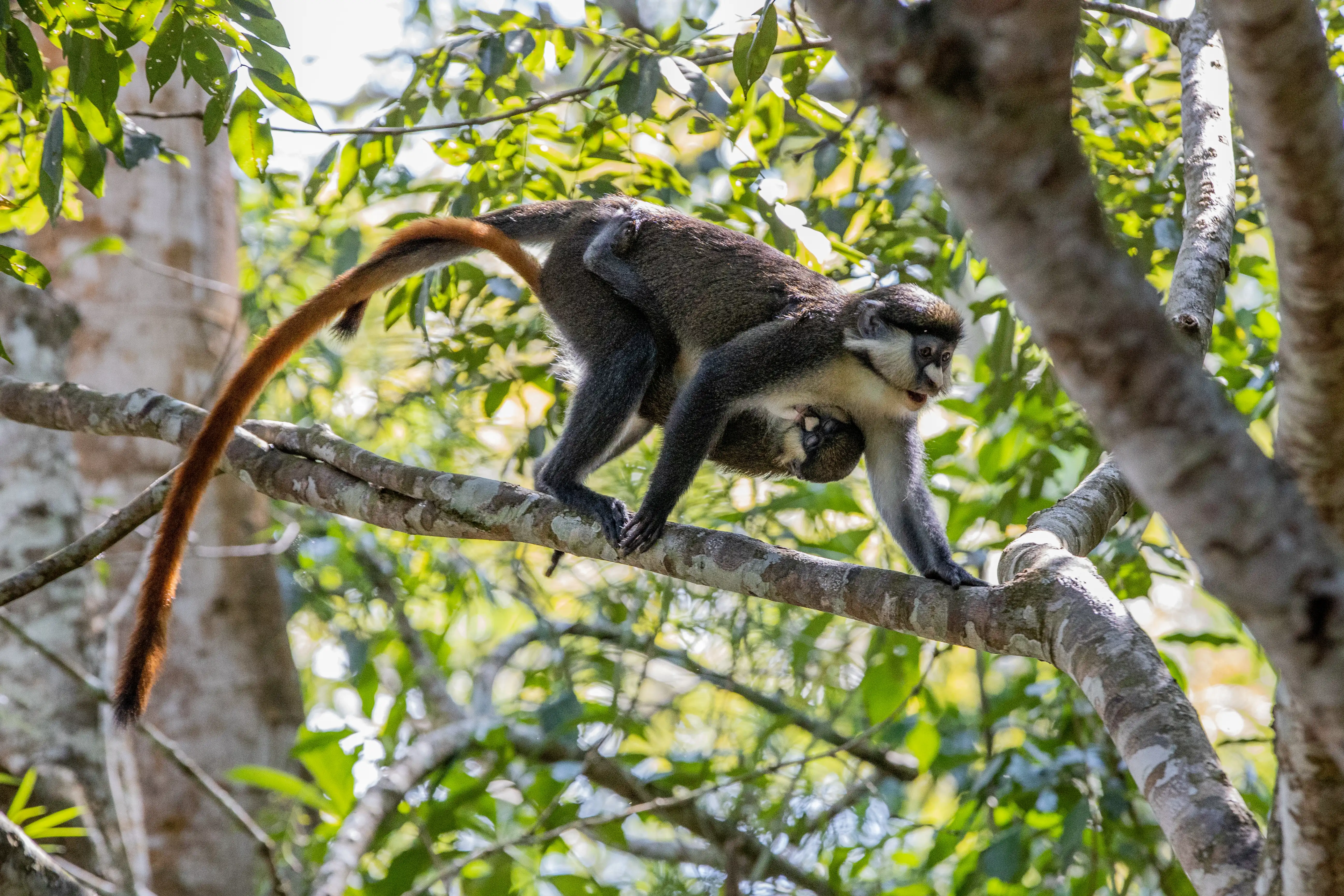
Every afternoon around four o'clock, monkeys gather above the Okapi field station for what staff call their meeting, the red colobus always first to arrive. The air thickens with sound and humidity as daylight drains through the canopy. The thump of falling fruit, the splash of an elephant unseen, a distant chimpanzee call carried through mist. Beneath the noise, researchers finish their notes and prepare for night surveys.
The Reserve was established in 1992, designated a World Heritage Site by 1996, and has remained on UNESCO's list of World Heritage Sites in Danger since 1997 — a reflection of pressures that have never relented. Three hundred eco-guards protect 13,700 square kilometres: one guard for every 68 square kilometres of forest. Conventional enforcement is not difficult here. It is impossible.
Protection here depends on something else entirely.
The People Who Know This Forest
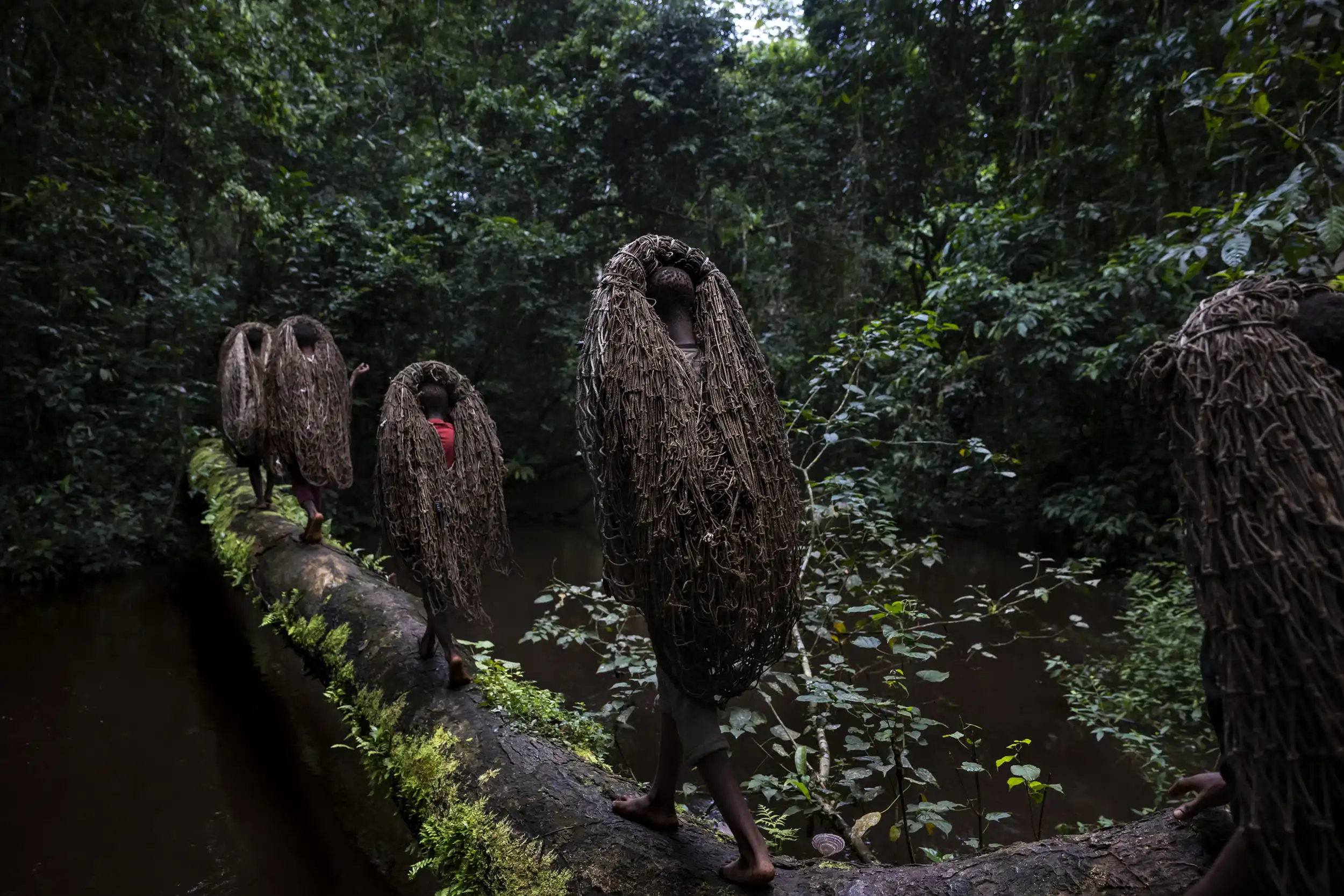
Trackers move silently through the undergrowth, reading signs invisible to outsiders – a bent twig, a print in the mud, the scent of an elephant days after it passed. Without them, most surveys would be impossible.
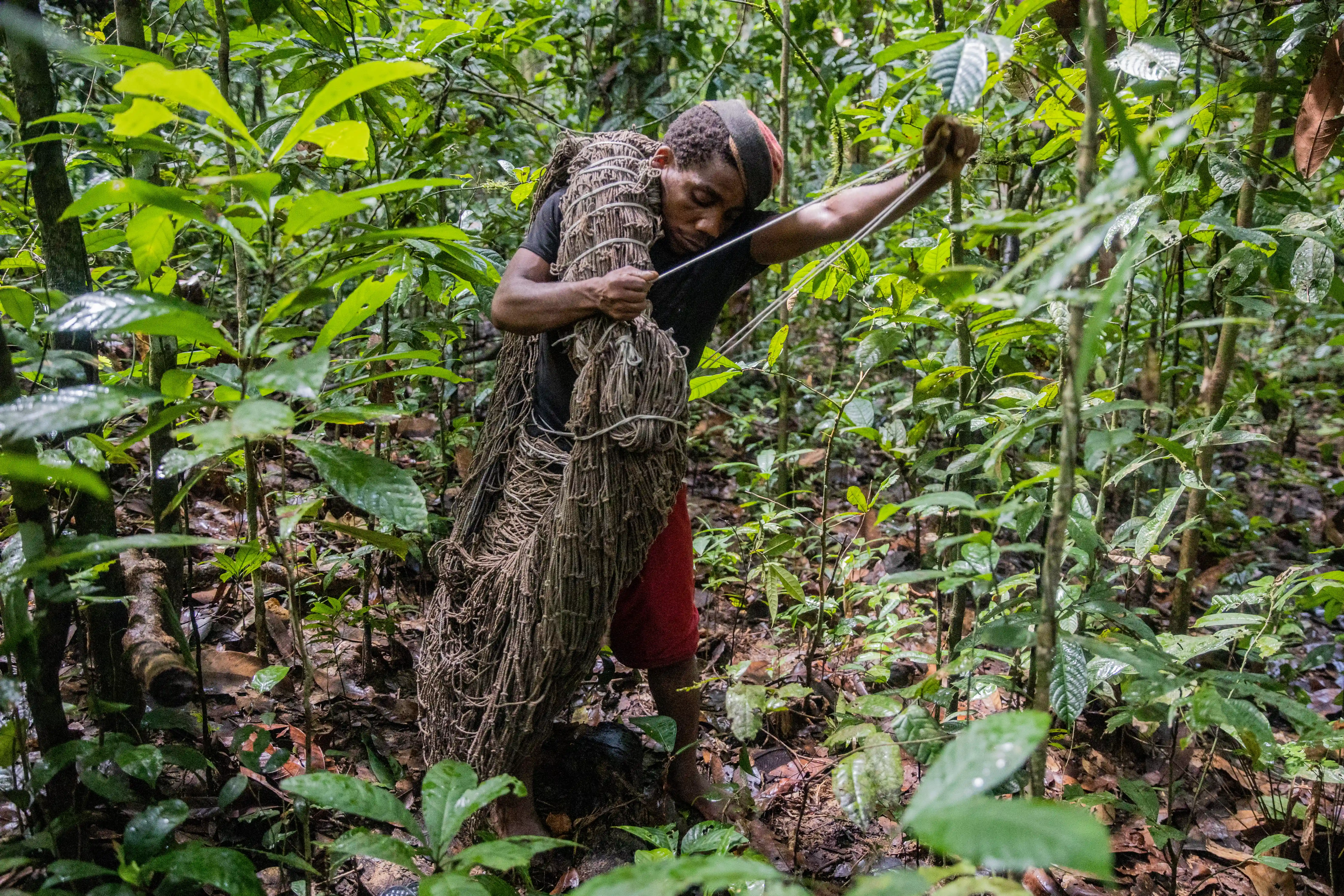
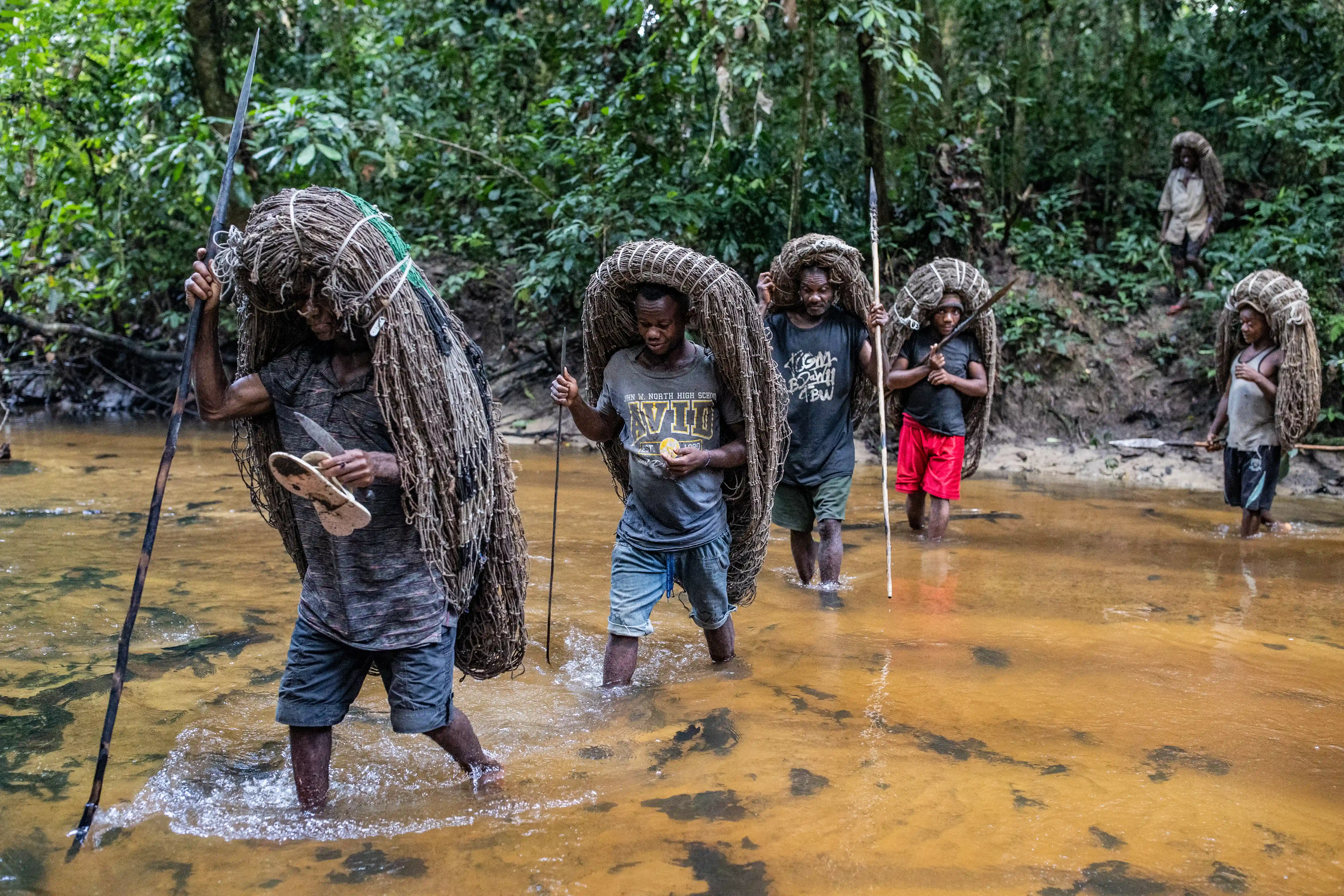
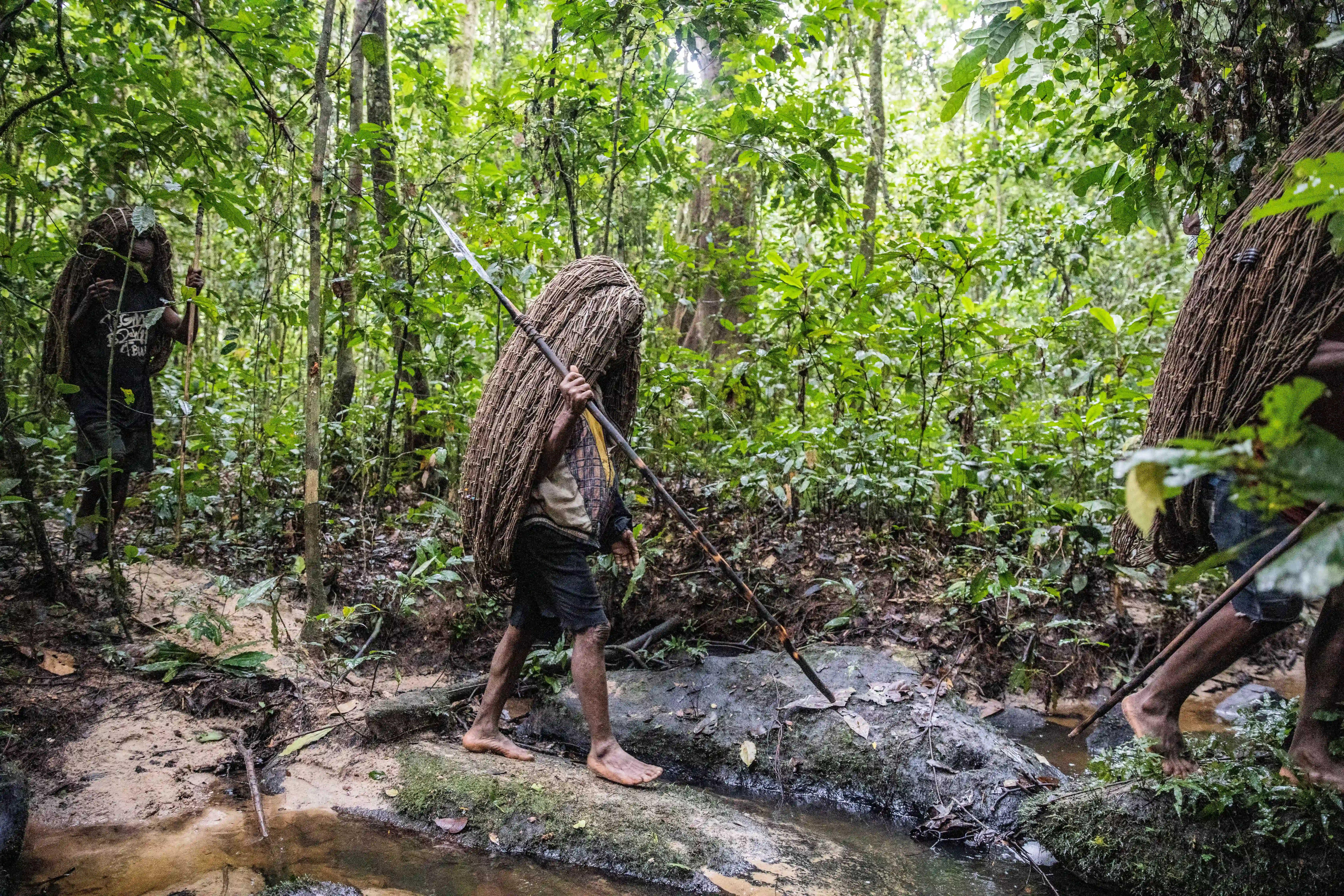
For more than 40,000 years, the Mbuti and Efe peoples have shaped these ecosystems. Their ecological knowledge — where elephants cross, which plants heal, how water shifts with the seasons — underpins much of the Reserve's research and monitoring. "The forest is their supermarket," staff say, but it is one managed through ancient restraint.
Consider honey gathering. The rule is older than any conservation law: take part of the comb, leave the rest, so the bees return and the forest continues to give. This practice, repeated across generations, embodies a different relationship with value — one where value is measured not in what can be extracted, but in what endures.
Yet the same communities whose knowledge sustains conservation face urgent economic realities.
What Wealth Means
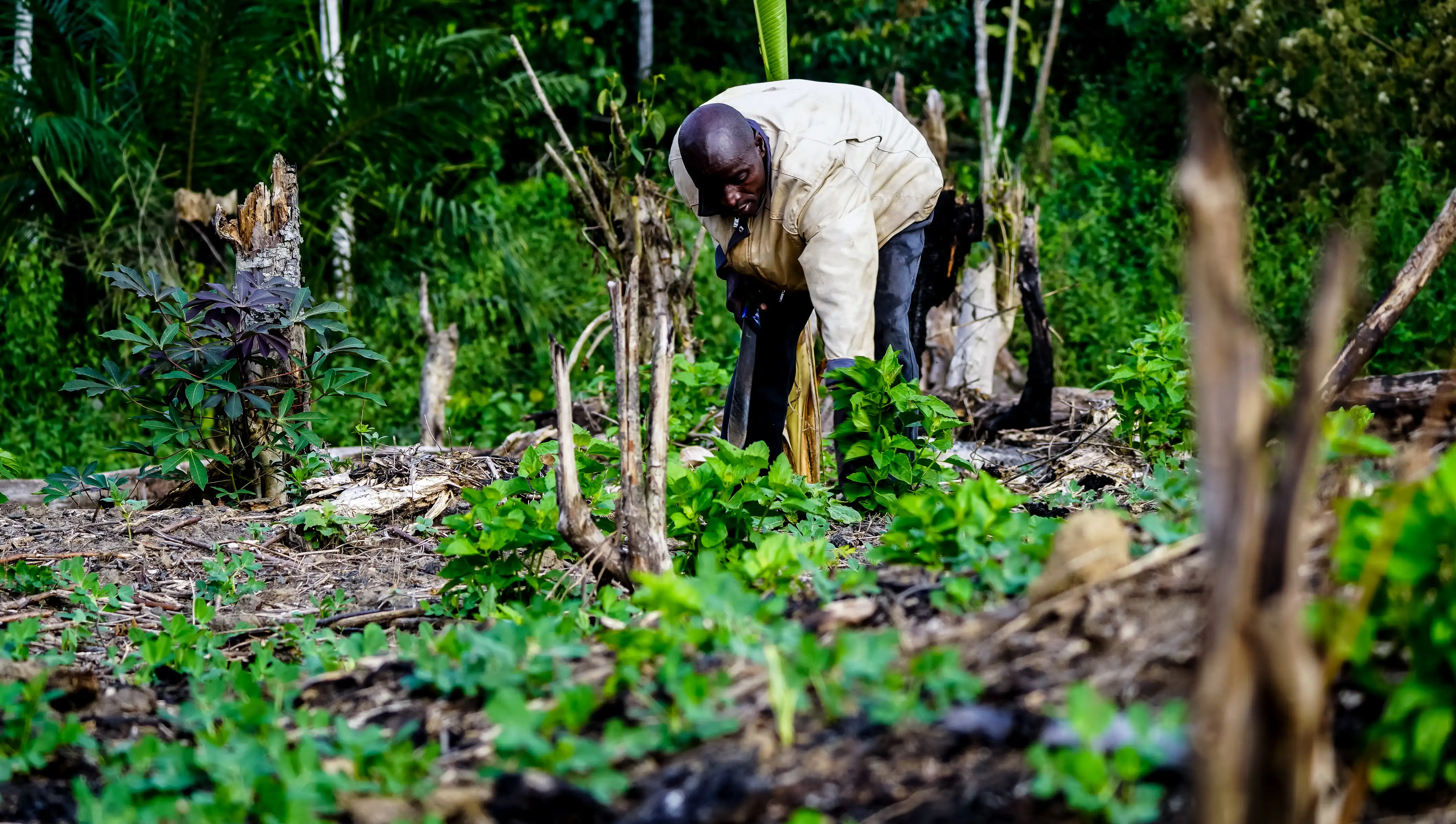
Many of the thousands working in Muchacha are Congolese citizens pursuing livelihoods in one of the world's poorest regions, in a landscape where economic need can redraw the boundaries of a World Heritage Site. When crops fail, when children need school fees, when illness strikes, gold becomes the fastest route to cash.
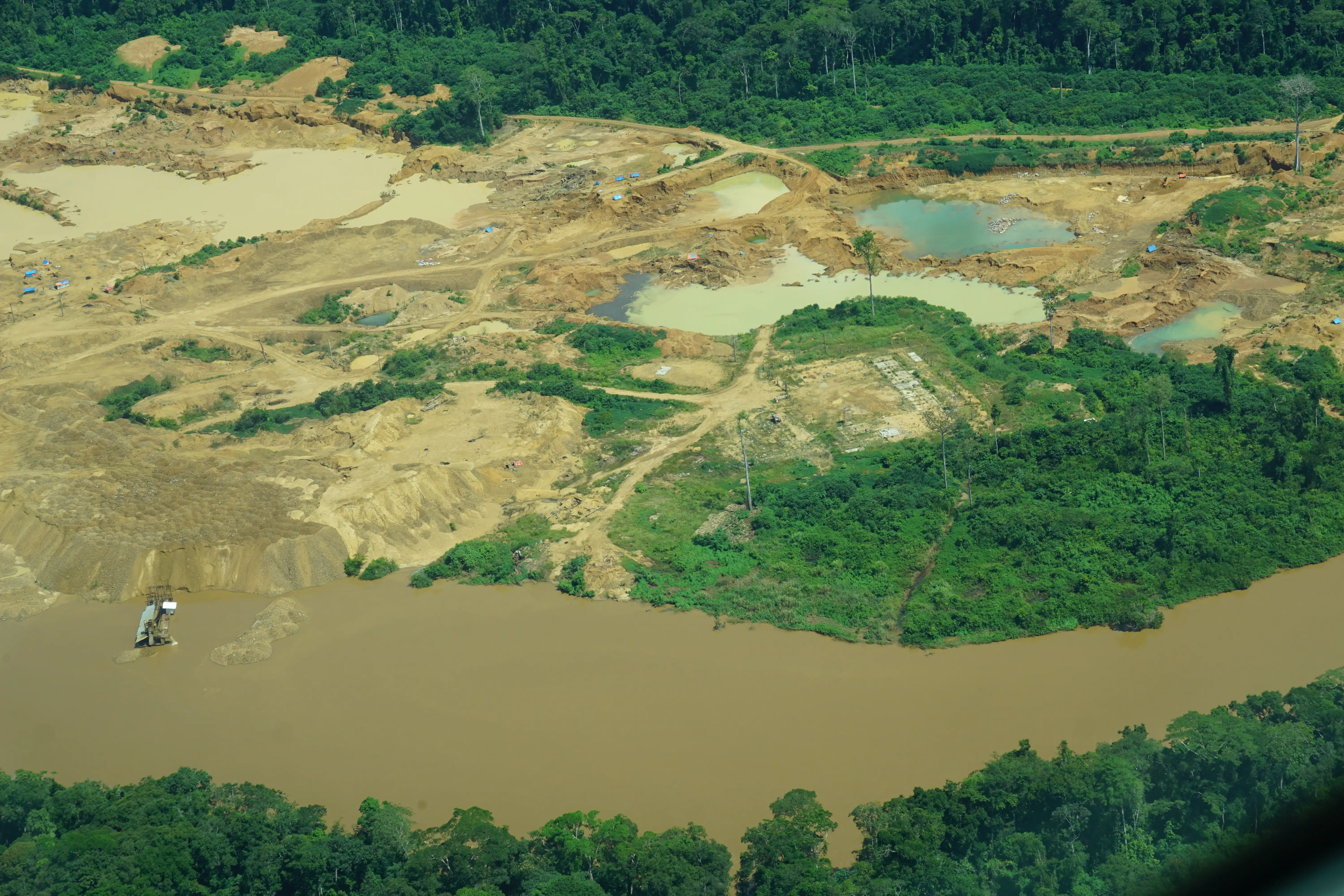
The choice is heuristic, but the consequences are irreversible.
One hectare cleared for mining yields gold for a season, then becomes barren ground requiring costly restoration that may never succeed. The same hectare left as forest sequesters carbon worth thousands of dollars annually in climate stability, produces food and medicine for communities indefinitely, maintains the hydrological cycles that agriculture downstream depends upon, and provides habitat for species found nowhere else.
The solution will not come through eviction or denial. It will come through proving that protecting the forest generates more value – more jobs, more income, more security, more future – than destroying it. That is the work.
A Challenge Larger than Okapi
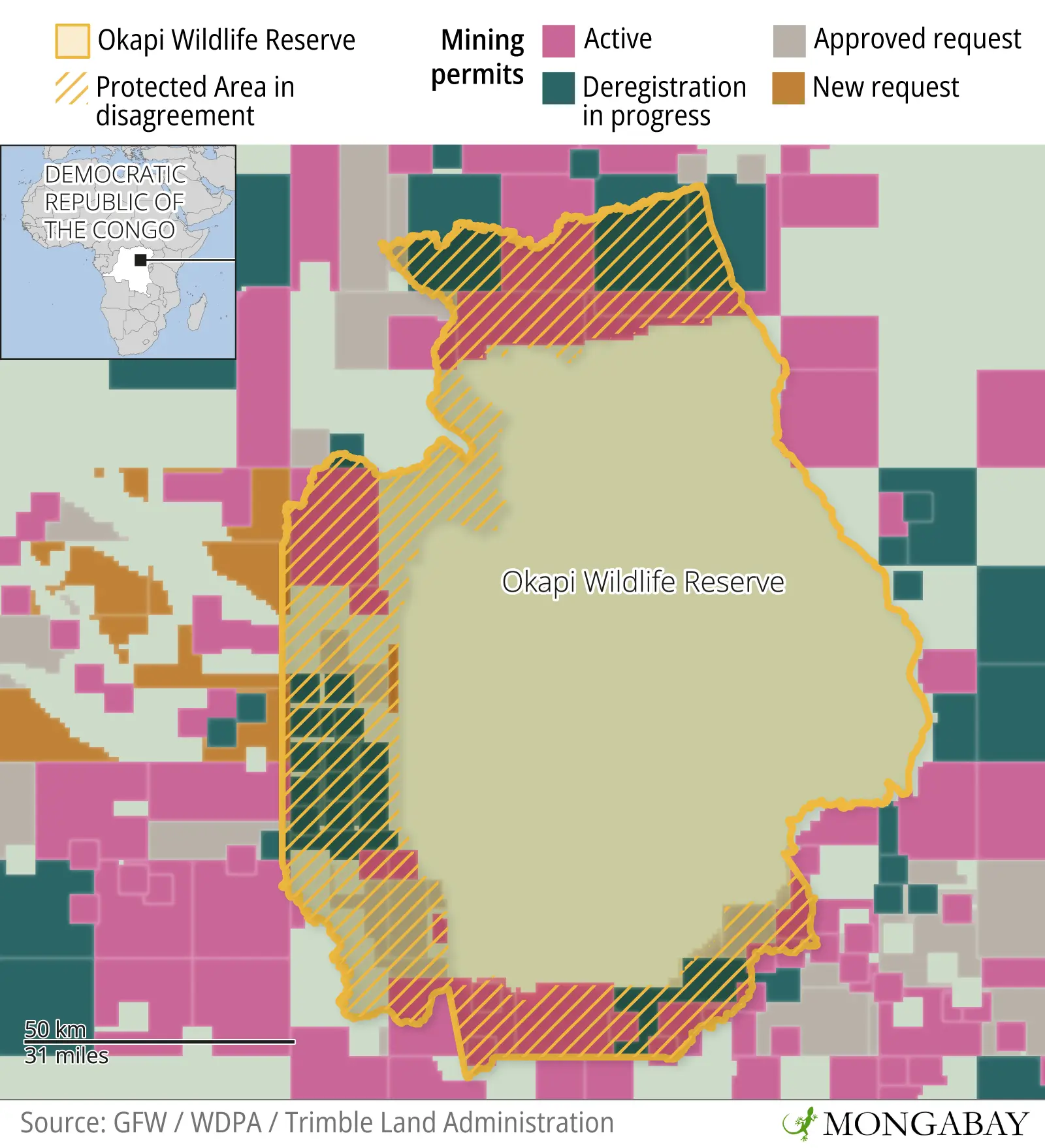
The conflict playing out at Muchacha is not unique — and that is what makes it important. Across the Congo Basin, mining permits overlap protected areas with troubling frequency – a consequence of cadastral systems that were never designed to coordinate with conservation boundaries. The permits are often technically legal, but the damage is no less real.
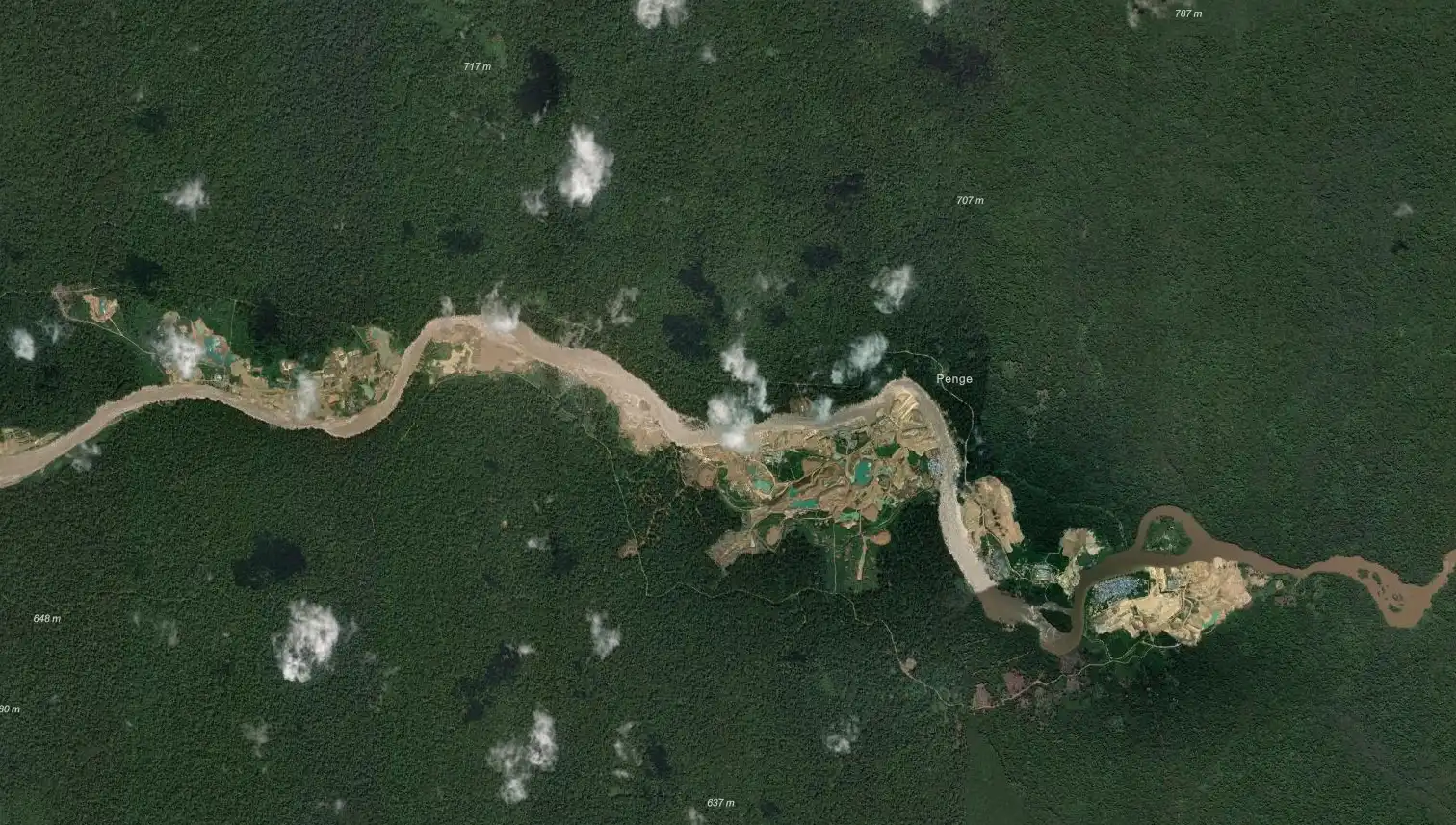
Between January and May alone, the reserve lost more than 480 hectares of forest – equivalent to 900 American football fields.
What makes Okapi's case consequential is position. The Ituri forest forms the central link between the Congo Basin's western and eastern rainforest blocks — a corridor that maintains genetic connectivity for species and hydrological function for the entire system. Sever that link, and the impacts extend far beyond one reserve. The Congo Basin generates rainfall that waters agriculture across Central Africa. Its forests store carbon equivalent to a decade of global emissions.
How DRC navigates this conflict — whether extraction or protection prevails, and on what terms — will signal what's possible across the tropics. Forested nations everywhere face the same arithmetic: immediate revenue from resources beneath the soil, versus long-term value from the living systems above it.
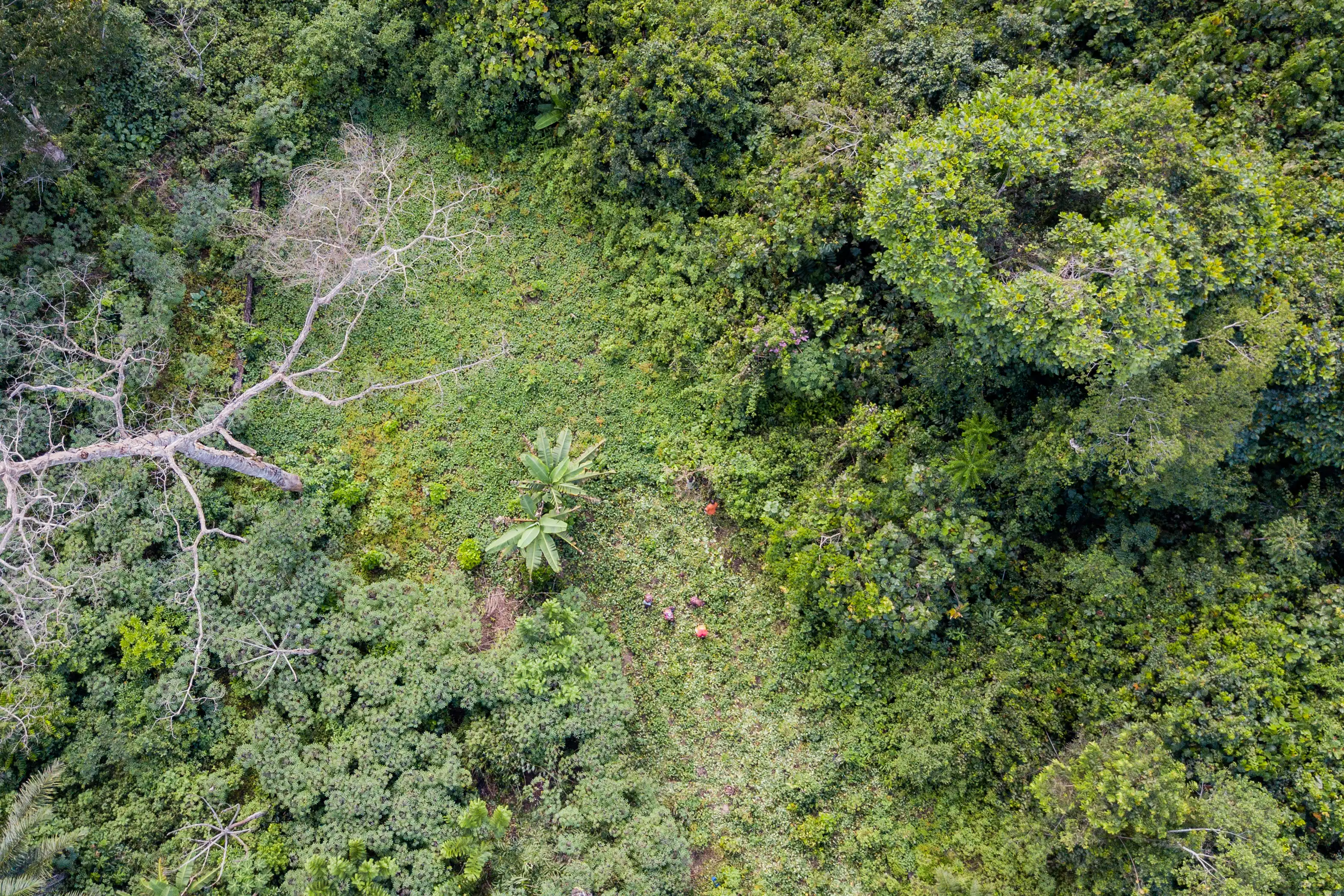
These are not local resources; they are planetary infrastructure.
Building Alternatives That Work
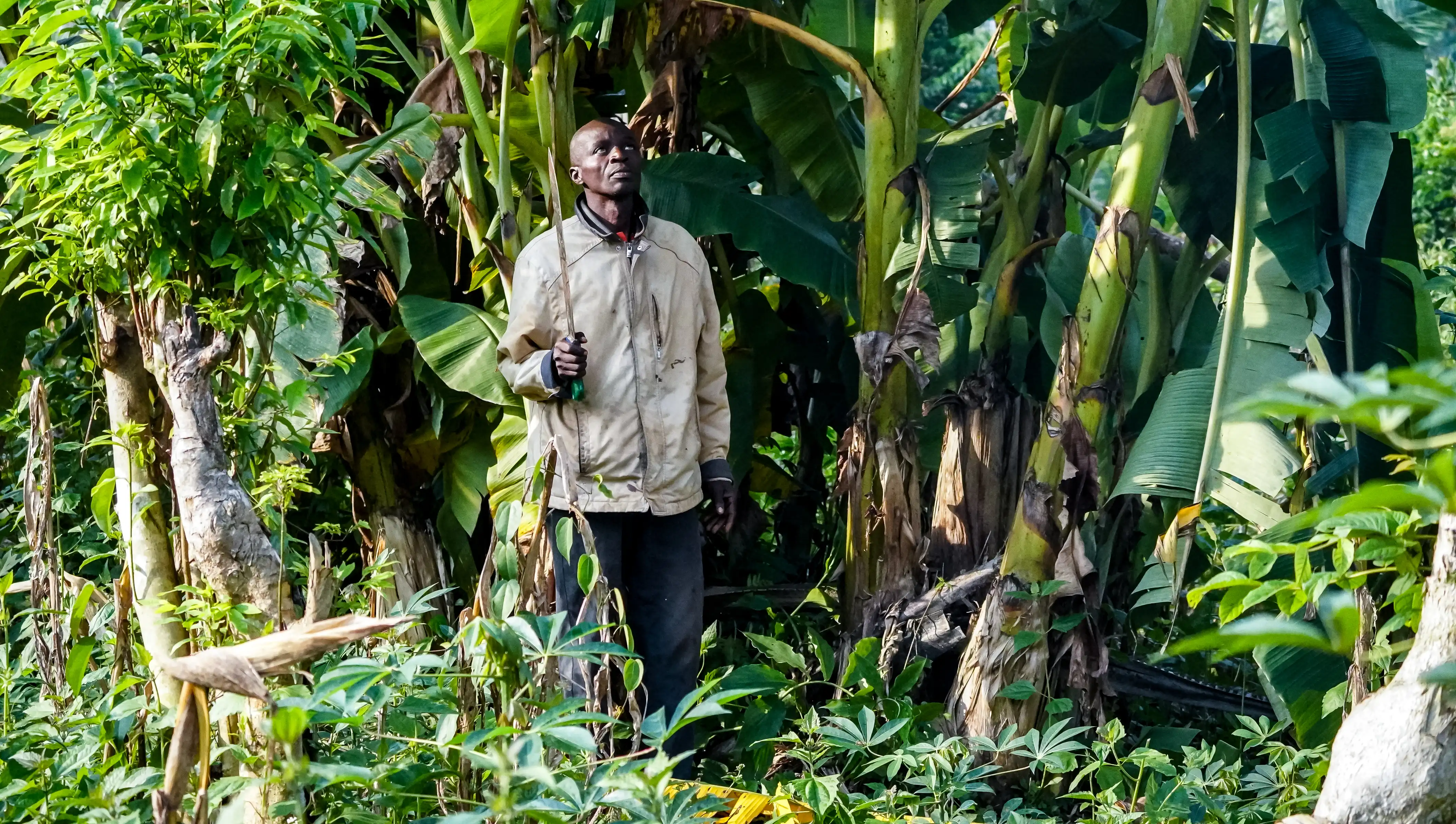
In the hills that border the Reserve, something different is taking root. Farmers who once saw only two options — subsistence agriculture or the mine — are now harvesting shade-grown cocoa within community forestry concessions. The beans fetch premium prices in specialty markets that reward high environmental standards. It is not symbolic. It is income that competes with mining's quick returns while keeping the forest intact. The cocoa they produce is now sold to buyers who pay above-market rates for verified sustainable sourcing. For families who joined, the calculus has shifted: the forest is no longer an obstacle to income. It is the source of it.
The Politics of Patience
Community solutions alone cannot resolve Muchacha and other mining sites across the Reserve. The mine operates on an official exploitation permit issued through proper government channels, within what mining authorities once believed were legal boundaries. The fact that those boundaries overlap a World Heritage Site is first a technical problem — one requiring different arms of government to coordinate in ways they never have before.
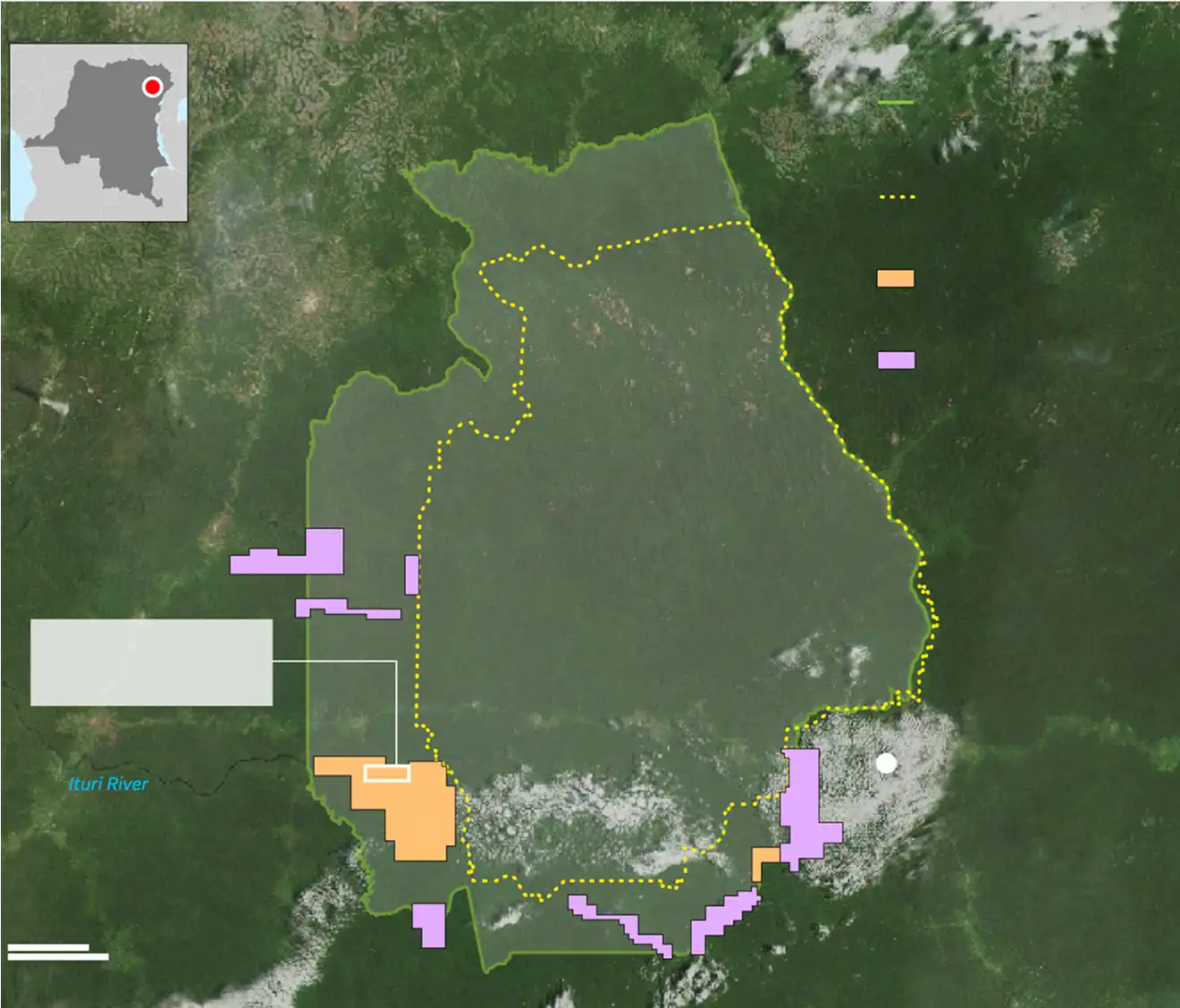
WCS's advocacy led to the creation of a joint commission bringing together ICCN — the Congolese Institute for Nature Conservation — and CAMI, the national mining cadastre, for the first time. Officials who had been managing the same landscape from contradictory datasets now travel together to verify boundaries jointly.
For the first time, the people responsible for this landscape are looking at the same map and agreeing on what it shows. Officials who once worked from contradictory datasets now verify boundaries jointly, aligning records step by methodical step.
Each mission builds toward a shared understanding of the land they steward. These technical steps lay groundwork for political decisions that aim to establish the legal clarity needed to resolve the permits' status and create a precedent – and also a model – for protected areas across the country.
The Long View
Progress here is measured in years, not months. The bureaucratic architecture that made the mine defensible is being dismantled – paper by paper, boundary by boundary, agreement by agreement.
What happens here will echo far beyond Congo. The Ituri forest is part of the world's second-largest tropical rainforest. How nations like Congo reconcile development and protection will help determine the future not just of biodiversity, but of economic prosperity.
Around the Reserve, community forestry concessions are proving that protecting the forest can generate wealth. The grievance redress mechanism developed here has spread to sites across Congo and beyond, showing that local solutions can reshape systems. Indigenous Peoples' rights legislation is creating the foundations that make tenure security possible. These shifts are not yet a victory. But they are no longer hypothetical.
Where the Okapi Walks
At dusk, sound returns to the forest. Hornbills call from the canopy. Insects begin their night rhythm. Somewhere in the undergrowth, an okapi moves – a quiet measure of progress in a landscape still negotiating its future. Not a symbol of what might be lost, but evidence of what is being secured.
The Muchacha pumps will start again before sunrise. But something is shifting. The maps are being redrawn. The alternatives are taking root. The systems that once made extraction inevitable are being replaced by systems that value nature. Not everywhere. Not yet. But here, in this forest that connects the Congo Basin's two great blocks of green, the proof is emerging that another path exists.